It is only in the last two hundred years that the chimney
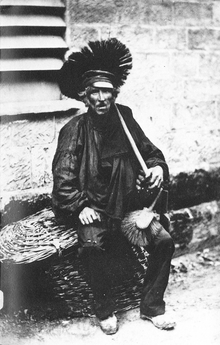
has grown large enough to hold a man, giving rise to the image of the chimney sweep as it developed in the time of the Industrial Revolution. In the fifteenth and sixteenth centuries in Western Europe, construction of rooflines with crow-stepped gables became common to allow chimney sweeps convenient access to the chimney top. With the increased urban population that came with the Age of Industrialization, the number of houses with chimneys grew apace and the occupation of chimney sweep became much sought-after. It was also one of the more commonly difficult, hazardous, and low-paying occupations of the era, and consequently has been derided in verse, ballad and pantomime. However, once modern heating technologies became more available, the occupation became romanticized in popular media and literature.
In 1788, the Act for the Better Regulation of Chimney Sweepers and their Apprentices was passed, to limit a sweeper to six apprentices, at least 8 years old, but lacked enforcement.
A law passed in 1840 which made it illegal for anyone under the age of 21 to sweep chimneys. A Friendly Society for the Protection and Education of Chimney-Sweepers' Boys had been established in 1800. The 1840 Act became a dead letter. The Chimney Sweepers Regulation Act 1864, c37. tightened controls significantly. Lord Shaftesbury was a main proponent of the Bill.
A Chimney Sweepers Act was passed in 1875 that required chimney sweepers to be authorised by the police to carry on their businesses in the district, providing enforcement.
Modern chimney sweep
With the rise of central heating systems and the decline in the use of chimneys, the sweep profession became less prevalent, though the service continues in most communities on a smaller scale.
Chimney Sweep Superstitions
Extracted from wikipedia